
Our Story

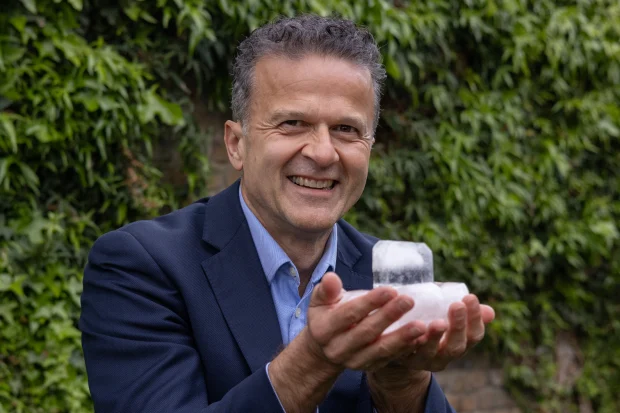
Photograph: Bernard Steffin, 2026
Real Ice’s work is inspired primarily by the works of Prof Steven Desch1 and Cecilia Bitz2
In 2019, a group of volunteers came together to explore how the Arctic sea‑ice restoration concept described in the Desch paper could be advanced as a practical initiative - emerging from The Siku Project. That work became “Real Ice”, and the initial technological concept for ice thickening began to take shape.
In 2022, Real Ice was formalised as a UK company with a mission to understand whether the underlying science could be translated into real‑world, low‑emissions technology for restoring Arctic sea ice. Taking the Bitz paper as our guide, through small-scale field campaigns on sea ice in Nome, Alaska, and over the subsequent two years in Cambridge Bay, Nunavut, the team has investigated how engineered ice thickening performs as a potential restoration approach under actual Arctic conditions.
Now in 2026, Real Ice is completing its fourth winter of small‑scale Arctic field trials of the ice‑thickening method. This work has been made possible by the support of leading Arctic and sea‑ice researchers; an exceptional network of local guides and traditional knowledge holders in Cambridge Bay; and collaborating engineers, operators, climate scientists, and academic and research institutions worldwide, including Polar Knowledge Canada and the Canadian High Arctic Research Station (CHARS) in Cambridge Bay; the University of Cambridge’s Centre for Climate Repair, UN Ocean Decade, Ocean Visions and the UK Government’s Advanced Research and Invention Agency (ARIA).
Prof Ed Blanchard at University of Washington’s 2026 paper3 on the Real Ice field study results from winter 2024/5 further demonstrates the company’s commitment to grounding our research staging in empirical data, traditional knowledge, peer scrutiny, and transparent publication.
Real Ice’s work is inspired primarily by the works of Prof Steven Desch1 and Cecilia Bitz2
In 2019, a group of volunteers came together to explore how the Arctic sea‑ice restoration concept described in the Desch paper could be advanced as a practical initiative - emerging from The Siku Project. That work became “Real Ice”, and the initial technological concept for ice thickening began to take shape.
In 2022, Real Ice was formalised as a UK company with a mission to understand whether the underlying science could be translated into real‑world, low‑emissions technology for restoring Arctic sea ice. Taking the Bitz paper as our guide, through small-scale field campaigns on sea ice in Nome, Alaska, and over the subsequent two years in Cambridge Bay, Nunavut, the team has investigated how engineered ice thickening performs as a potential restoration approach under actual Arctic conditions.
Now in 2026, Real Ice is completing its fourth winter of small‑scale Arctic field trials of the ice‑thickening method. This work has been made possible by the support of leading Arctic and sea‑ice researchers; an exceptional network of local guides and traditional knowledge holders in Cambridge Bay; and collaborating engineers, operators, climate scientists, and academic and research institutions worldwide, including Polar Knowledge Canada and the Canadian High Arctic Research Station (CHARS) in Cambridge Bay; the University of Cambridge’s Centre for Climate Repair, UN Ocean Decade, Ocean Visions and the UK Government’s Advanced Research and Invention Agency (ARIA).
Prof Ed Blanchard at University of Washington’s 2026 paper3 on the Real Ice field study results from winter 2024/5 further demonstrates the company’s commitment to grounding our research staging in empirical data, traditional knowledge, peer scrutiny, and transparent publication.
Real Ice’s work is inspired primarily by the works of Prof Steven Desch1 and Cecilia Bitz2
In 2019, a group of volunteers came together to explore how the Arctic sea‑ice restoration concept described in the Desch paper could be advanced as a practical initiative - emerging from The Siku Project. That work became “Real Ice”, and the initial technological concept for ice thickening began to take shape.
In 2022, Real Ice was formalised as a UK company with a mission to understand whether the underlying science could be translated into real‑world, low‑emissions technology for restoring Arctic sea ice. Taking the Bitz paper as our guide, through small-scale field campaigns on sea ice in Nome, Alaska, and over the subsequent two years in Cambridge Bay, Nunavut, the team has investigated how engineered ice thickening performs as a potential restoration approach under actual Arctic conditions.
Now in 2026, Real Ice is completing its fourth winter of small‑scale Arctic field trials of the ice‑thickening method. This work has been made possible by the support of leading Arctic and sea‑ice researchers; an exceptional network of local guides and traditional knowledge holders in Cambridge Bay; and collaborating engineers, operators, climate scientists, and academic and research institutions worldwide, including Polar Knowledge Canada and the Canadian High Arctic Research Station (CHARS) in Cambridge Bay; the University of Cambridge’s Centre for Climate Repair, UN Ocean Decade, Ocean Visions and the UK Government’s Advanced Research and Invention Agency (ARIA).
Prof Ed Blanchard at University of Washington’s 2026 paper3 on the Real Ice field study results from winter 2024/5 further demonstrates the company’s commitment to grounding our research staging in empirical data, traditional knowledge, peer scrutiny, and transparent publication.
Desch, S.J., Smith, N., Groppi, C., Vargas, P., Jackson, R., Kalyaan, A., Nguyen, P., Probst, L., Rubin, M.E., Singleton, H., Spacek, A., Truitt, A., Zaw, P.P. and Hartnett, H.E. (2017), Arctic ice management. Earth's Future, 5: 107-127. https://doi.org/10.1002/2016EF000410
Pauling, A. G., & Bitz, C. M. (2021). Arctic sea ice response to flooding of the snow layer in future warming scenarios. Earth's Future, 9, e2021EF002136. https://doi.org/10.1029/2021EF002136
Blanchard-Wrigglesworth, Edward & Ceccolini, Andrea & Smith, Andrew & Woods, Andrew & Sherwin, Cían & Borowski, Konrad & Martin-Daguet, Pascal & Woods, Simon & Clipston, Tom & Gioacchino, Tommaso & Wieringa, Molly & Pantling, Jacob & Oglethorpe, Kate & Fitzgerald, Shaun & Desch, Steven & Hartnett, Hilairy & Kelly, Brendan & Tan, Alison & Steffin, Bernard & Bitz, Cecilia. (2025). Artificial flooding leads to thicker and brighter Arctic sea ice. 10.22541/essoar.176556285.57463888/v1.







Independent Advisors

Prof. Cecelia Bitz
Professor and Chair, Atmospheric Sciences; Director, Program on Climate Change, University of Washington; Co-lead, Sea Ice Prediction Network enabling global coupled climate modeling
Prof. Cecelia Bitz
Professor and Chair, Atmospheric Sciences; Director, Program on Climate Change, University of Washington; Co-lead, Sea Ice Prediction Network enabling global coupled climate modeling

Prof. Ed Blanchard-Wrigglesworth
Research Associate Professor, Department of Atmospheric Sciences University of Washington Sea Ice Prediction Network Science team at NASA Operation IceBridge
Prof. Ed Blanchard-Wrigglesworth
Research Associate Professor, Department of Atmospheric Sciences University of Washington Sea Ice Prediction Network Science team at NASA Operation IceBridge

Prof. Steve Desch
Professor, School of Earth and Science Exploration, Arizona State University; Advocate of concept of Arctic Ice Management
Prof. Steve Desch
Professor, School of Earth and Science Exploration, Arizona State University; Advocate of concept of Arctic Ice Management

Dr. Shaun Fitzgerald
Director at Centre for Climate Repair, Cambridge; Director of Research, Cambridge Zero; Fellow of the Royal Academy of Engineering; Academic research, business, government policy and public engagement experience
Dr. Shaun Fitzgerald
Director at Centre for Climate Repair, Cambridge; Director of Research, Cambridge Zero; Fellow of the Royal Academy of Engineering; Academic research, business, government policy and public engagement experience

Prof. Hilairy Hartnett
Professor and Director School of Oceanography University of Washington
Prof. Hilairy Hartnett
Professor and Director School of Oceanography University of Washington

Prof. Brendan P. Kelly
Chief Scientist, Int’l Arctic Research Center University of Alaska, Fairbanks; Senior Fellow, Middlebury Inst of Int’l Studies; Marine endocrinologist with focus on sea ice; research across Arctic and Antarctica
Prof. Brendan P. Kelly
Chief Scientist, Int’l Arctic Research Center University of Alaska, Fairbanks; Senior Fellow, Middlebury Inst of Int’l Studies; Marine endocrinologist with focus on sea ice; research across Arctic and Antarctica

Prof. Peter Wadhams
Emeritus Professor of Ocean Physics, Head of the Polar Ocean Physics Group, Applied Mathematics and Theoretical Physics, University of Cambridge
Prof. Peter Wadhams
Emeritus Professor of Ocean Physics, Head of the Polar Ocean Physics Group, Applied Mathematics and Theoretical Physics, University of Cambridge
Our Partners

Ekaluktutiak Hunters & Trappers Organization
EHTO are Real Ice’s primary local co-researchers bringing their traditional knowledge to the design and execution of our field research.
Learn More
Ekaluktutiak Hunters & Trappers Organization
EHTO are Real Ice’s primary local co-researchers bringing their traditional knowledge to the design and execution of our field research.
Learn More

Center for Climate Repair at the University of Cambridge
CCR is a strategic partner to Real Ice bringing a global climate repair perspective to our research and complimentary work on sea ice models, lab research, and field support.
Learn More
Center for Climate Repair at the University of Cambridge
CCR is a strategic partner to Real Ice bringing a global climate repair perspective to our research and complimentary work on sea ice models, lab research, and field support.
Learn More

University of Washington
The University of Washington is our key academic collaborator working with our team across modeling, field work design and execution, and academic paper writing.
Learn More
University of Washington
The University of Washington is our key academic collaborator working with our team across modeling, field work design and execution, and academic paper writing.
Learn More

Arizona State University
ASU supports Real Ice with field testing design and field measurement support.
Learn More
Arizona State University
ASU supports Real Ice with field testing design and field measurement support.
Learn More

Ocean Visions
Ocean Visions supports advancing collaborative research to slow and avoid catastrophic loss of critical marine ecosystems while we rebalance global carbon cycles.
Learn More
Ocean Visions
Ocean Visions supports advancing collaborative research to slow and avoid catastrophic loss of critical marine ecosystems while we rebalance global carbon cycles.
Learn More

Kitikmeot Chamber of Commerce Member
Real Ice is proud to be a member of the Kitikmeot Chamber of Commerce located in Cambridge Bay.
Learn More
Kitikmeot Chamber of Commerce Member
Real Ice is proud to be a member of the Kitikmeot Chamber of Commerce located in Cambridge Bay.
Learn More

Operaatio Arktis
Real Ice supports the advocacy efforts of Operation Arktis on behalf of Arctic Communities and Youth.
Learn More
Operaatio Arktis
Real Ice supports the advocacy efforts of Operation Arktis on behalf of Arctic Communities and Youth.
Learn More

UN Decade of Ocean Science for Sustainable Development
Real Ice has been endorsed as a Decade Project by the IOC Executive Secretary as part of the UN Ocean Decade.
Learn More
UN Decade of Ocean Science for Sustainable Development
Real Ice has been endorsed as a Decade Project by the IOC Executive Secretary as part of the UN Ocean Decade.
Learn More

The University of the Arctic
The University of the Arctic (UArctic) is a cooperative network of universities, colleges, research institutes and other organisations concerned with education and research in and about the North. Real Ice partners with UArctic to advance Arctic research and share knowledge across the circumpolar region.
Learn More
The University of the Arctic
The University of the Arctic (UArctic) is a cooperative network of universities, colleges, research institutes and other organisations concerned with education and research in and about the North. Real Ice partners with UArctic to advance Arctic research and share knowledge across the circumpolar region.
Learn More
Our Partners
Ekaluktutiak Hunters & Trappers Organization
EHTO are Real Ice’s primary local co-researchers bringing their traditional knowledge to the design and execution of our field research.
Learn More
Center for Climate Repair at the University of Cambridge
CCR is a strategic partner to Real Ice bringing a global climate repair perspective to our research and complimentary work on sea ice models, lab research, and field support.
Learn More
University of Washington
The University of Washington is our key academic collaborator working with our team across modeling, field work design and execution, and academic paper writing.
Learn More
Arizona State University
ASU supports Real Ice with field testing design and field measurement support.
Learn More
Ocean Visions
Ocean Visions supports advancing collaborative research to slow and avoid catastrophic loss of critical marine ecosystems while we rebalance global carbon cycles.
Learn More
Kitikmeot Chamber of Commerce Member
Real Ice is proud to be a member of the Kitikmeot Chamber of Commerce located in Cambridge Bay.
Learn More
Operaatio Arktis
Real Ice supports the advocacy efforts of Operation Arktis on behalf of Arctic Communities and Youth.
Learn More
UN Decade of Ocean Science for Sustainable Development
Real Ice has been endorsed as a Decade Project by the IOC Executive Secretary as part of the UN Ocean Decade.
Learn More
The University of the Arctic
The University of the Arctic (UArctic) is a cooperative network of universities, colleges, research institutes and other organisations concerned with education and research in and about the North. Real Ice partners with UArctic to advance Arctic research and share knowledge across the circumpolar region.
Learn More


Get Involved.
Preserving sea ice requires collective effort.
Partner on research, policy, or community engagement.
Support the research through funding or institutional collaboration.
Follow results as they are published and shared openly.
Get Involved.
Preserving sea ice requires collective effort.
Partner on research, policy, or community engagement.
Support the research through funding or institutional collaboration.
Follow results as they are published and shared openly.
Get Involved.
Preserving sea ice requires collective effort.
Partner on research, policy, or community engagement.
Support the research through funding or institutional collaboration.
Follow results as they are published and shared openly.